Key Takeaways
- Sports injuries are often treated with rest, ice, and pain relievers, but that approach addresses symptoms rather than the underlying biomechanical cause.
- Without correcting the root cause, many sports injuries recur or lead to compensation patterns elsewhere in the body.
- Chiropractic care looks at the entire kinetic chain, the linked system of joints and muscles that work together during movement, not just the injury site.
- Soft tissue work and targeted rehab exercises play a key role in restoring strength and preventing reinjury.
- Back to Basics works with athletes at every level in Atlanta, building recovery plans that address the whole picture. Request an appointment with Back to Basics to get back to your sport with a plan built around you.
Why the Same Sports Injury Keeps Coming Back
If you've dealt with a sports injury that seems to heal, only to flare up again a few weeks or months later, you're not alone. Standard first-response treatment, meaning rest, ice, and over-the-counter pain relievers, can calm symptoms in the short term, but it often leaves the underlying cause untouched. Understanding why injuries recur, and what actually needs to happen for lasting recovery, can save athletes a lot of frustration.
Why Injuries Often Recur Without Proper Biomechanical Correction
When an injury occurs, the body naturally compensates. Muscles around the injured area tighten, movement patterns shift to protect the site of pain, and other joints or muscle groups start picking up extra load they weren't designed to handle. If that compensation pattern isn't addressed, it becomes its own source of dysfunction, often setting the stage for the same injury, or a new one, down the line.
AAOS OrthoInfo notes that overuse injuries specifically develop when repeated stress on a body part doesn't allow enough time for full recovery between activities, which is exactly the kind of pattern that can persist if the biomechanical root cause is never corrected.
How Chiropractic Addresses the Root Cause of Sports Injuries
Rather than focusing only on the specific site of pain, chiropractic sports rehabilitation at Back to Basics evaluates the entire kinetic chain, the connected sequence of joints and muscles that share load during movement, to understand how an injury developed and what's slowing recovery. This often reveals contributing factors well outside the injured area itself, like a hip that isn't moving properly and is putting extra strain on the knee, or restricted spinal motion that's changing how force travels through the body during activity.
Spinal and extremity adjustments help restore proper movement to these compensating areas, which supports a more complete recovery rather than just quieting the pain at the injury site.
Common Sports Injuries and Their Underlying Causes
| Injury Type | Common Symptom | Frequent Underlying Contributor |
|---|---|---|
| Lower back strain | Pain during or after activity | Restricted hip or spinal mobility |
| Shoulder impingement | Pain with overhead movement | Postural imbalance, thoracic spine restriction |
| Knee pain | Discomfort during running or squatting | Hip or ankle compensation patterns |
| Recurring hamstring strain | Repeated tightness or reinjury | Pelvic misalignment, muscular imbalance |
The Role of Soft Tissue Work and Rehabilitation in Sports Injury Recovery
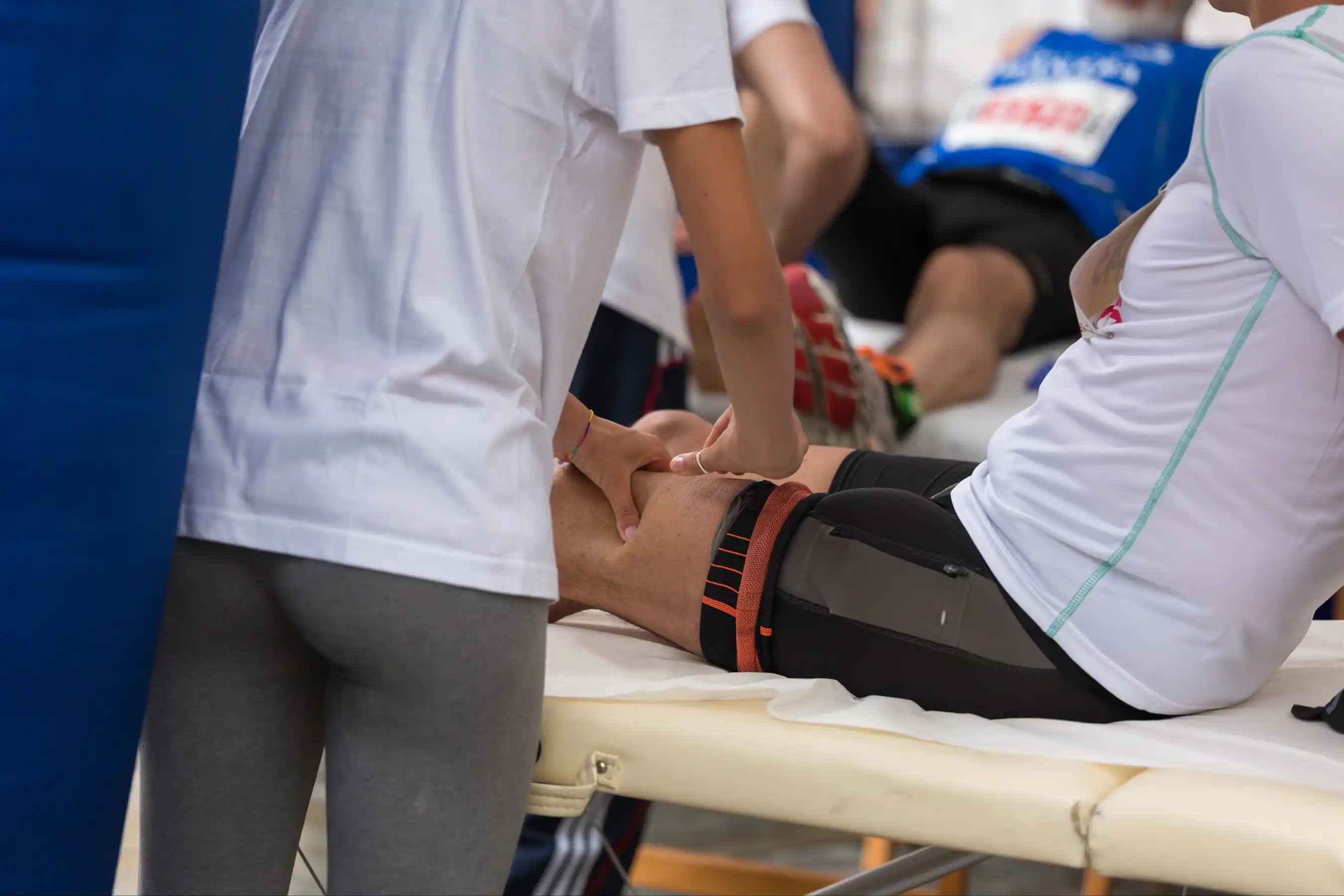
Adjustments address the joint side of the equation, but soft tissue work is just as important for full recovery. Deep tissue and sports massage help release the muscle tightness that develops around an injury and can accelerate clearance of metabolic waste from overworked tissue, reducing soreness and supporting the body's ability to adapt to training load.
Targeted rehabilitation exercises round out the picture, rebuilding strength and stability in the areas that were compensating during the injury, so the body isn't just pain-free but genuinely more resilient than before.
When to See a Chiropractor vs. Other Providers for a Sports Injury
Not every injury calls for the same provider. A chiropractor is often a strong first stop for musculoskeletal issues like back pain, joint restriction, and soft-tissue-related injuries that respond well to spinal and extremity adjustments combined with rehab. For injuries involving suspected fractures, significant swelling, or symptoms like numbness and weakness, a same-day evaluation with a physician or urgent care may be the more appropriate first step, with chiropractic care supporting recovery afterward. If you're ever unsure, a thorough evaluation at Back to Basics can help point you in the right direction.
Building a Complete Recovery Plan for Athletes
Athletes and active adults make up a significant part of the patient base at Back to Basics, and the approach reflects that. Care plans combine chiropractic adjustments, soft tissue work, and rehabilitation exercises to address both the injury and the compensation patterns surrounding it, with the goal of getting patients back to their sport in a stronger, more durable position than before.
Recover Fully, Not Just Temporarily
Treating only the symptoms of a sports injury often means treating the same injury again later. Addressing the biomechanical root cause, through a combination of chiropractic care, soft tissue work, and targeted rehab, gives your body a real chance to recover completely and stay resilient going forward.
Dealing with a sports injury that keeps coming back? Request an appointment with Back to Basics for sports rehab and chiropractic care in Atlanta, GA.
Frequently Asked Questions
Can a chiropractor help with sports injuries?
Yes. Chiropractic care addresses joint restriction and the compensation patterns that often develop around a sports injury, working alongside soft tissue therapy and rehab exercises to support a complete recovery.
Why do sports injuries keep coming back after treatment?
Recurring injuries often point to an underlying biomechanical issue, like a restricted joint or muscular imbalance, that wasn't addressed during initial treatment. Without correcting that root cause, the body remains vulnerable to reinjury.
What is the difference between an acute and an overuse sports injury?
Acute injuries happen suddenly, from a fall, twist, or collision, while overuse injuries develop gradually when a body part is stressed repeatedly without enough time to recover between activities.
How do I find a sports chiropractor near me?
Look for a chiropractor experienced in sports rehabilitation who evaluates the full kinetic chain rather than just the site of pain. At Back to Basics, new patients can also ask about a complimentary consultation before starting care.
When should I see a doctor instead of a chiropractor for a sports injury?
If you suspect a fracture, notice significant swelling, or experience numbness or weakness, a same-day evaluation with a physician or urgent care is the safer first step. Chiropractic care can support recovery once a more serious injury has been ruled out.
